Overview: Tire Service
Every spring and fall, tire shops across most of Canada run flat out. The spring and fall changeover is the heart of this trade, along with rotation, balancing, flat repairs, valve stems and the pressure sensors inside the wheels.
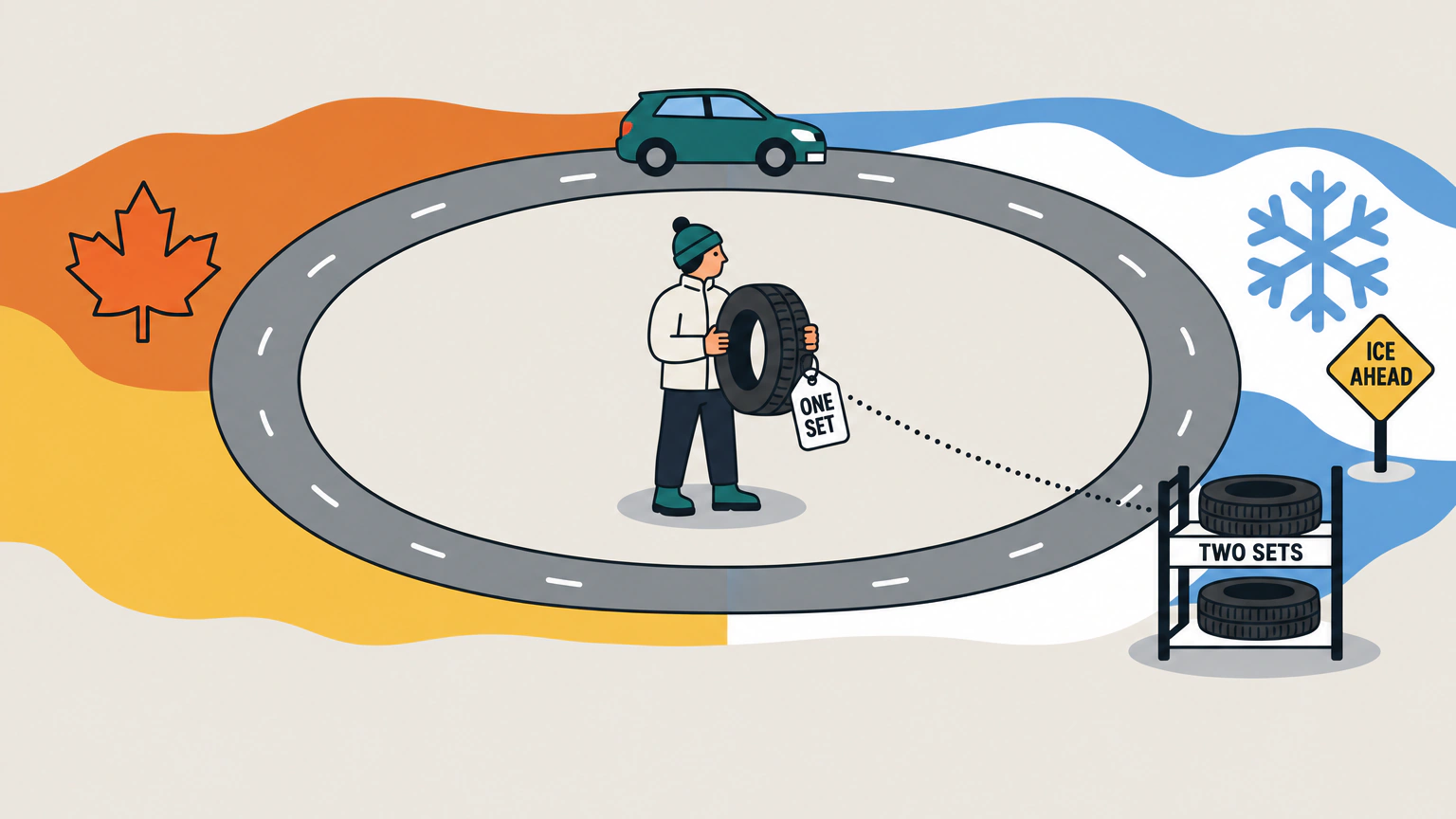
In Quebec the swap isn't optional. Cars registered there need winter tires from December to mid-March, and only tires with the mountain snowflake symbol or studs count. British Columbia requires winter tires or chains on signed highways through the cold months. Ontario leaves the choice to you, but every insurer there has to offer a discount if you run winter tires.
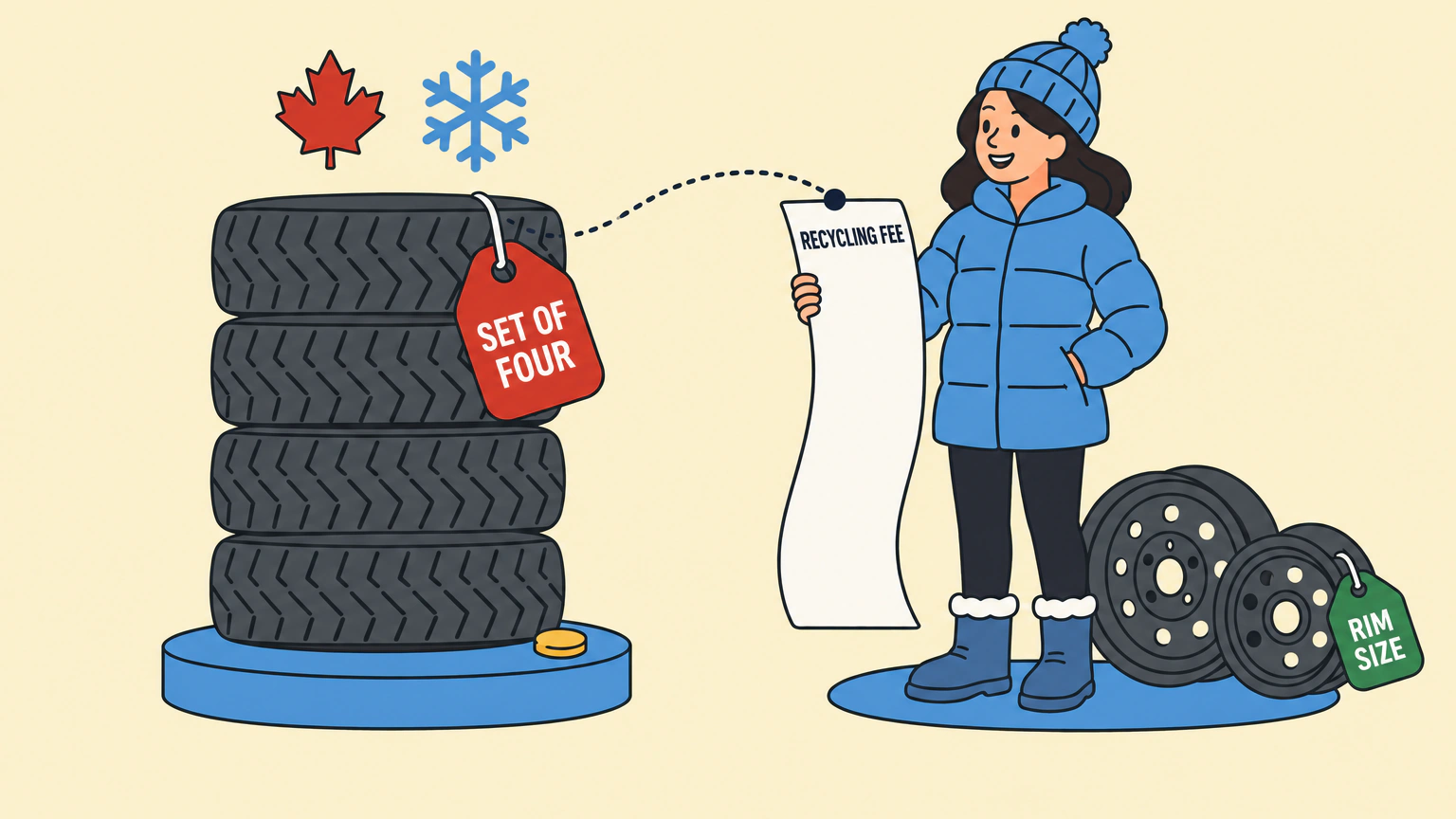
A spare set of rims saves time and wear. Swapping mounted wheels takes far less labour than prying tires off and rebalancing them every season. Storage is the other choice, so ask what it costs and whether the shop checks tread and pressure before your set goes back on.
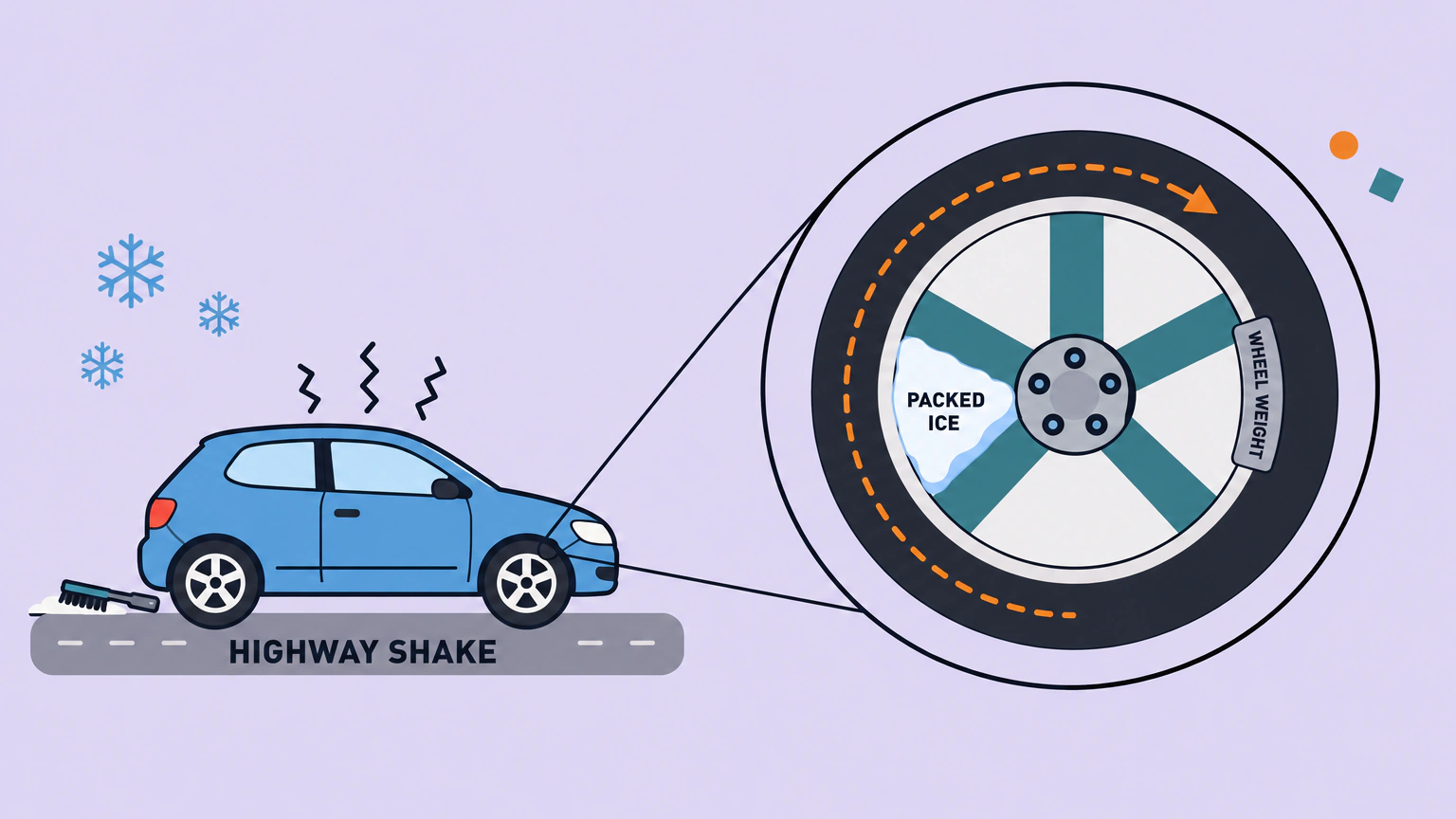
Cold and salt bring their own work. Pressure drops with the first frost, and salt eats at valve stems and sensor bodies until a tire weeps air at the rim.
Our listings show what each shop states on its own website, including booking, storage and hours. The province and city lists below lead to tire shops near you.
Cost of tire servicing in Canada
The main seasonal price difference is whether both sets of tires already have their own wheels. Compare the total for four and check whether balancing is included. Passenger cars and SUVs with ordinary wheel fitments. Run-flat, oversized and low-profile tires can cost more.
| Service | Budget estimate | Scope and notes |
|---|---|---|
| Seasonal swap, tires already on wheels | CA$40–80set of four | Wheel change and torque check; balancing normally separate. |
| Seasonal change, reusing the same wheels | CA$80–140set of four | Ordinary 14–18 in tires removed, mounted and balanced. |
| Tire rotation | CA$30–50set of four | Move existing tires to the appropriate positions; balancing separate. |
| Standard wheel balancing | CA$40–85set of four | Standard computerized balance; road-force testing separate. |
| Seasonal storage | CA$80–200set of four, one season | Confirm the end date, insurance and handling charges. |
What changes the price
- Mounted wheels versus loose tires
- Wheel diameter, tire construction and sensor work
- Storage duration and included handling
Ask before you book
- Is this the total for four, with balancing where needed?
- Are valves, sensor service and a torque recheck included?
- Does storage cover one season or a full year, and when does it end?
Comparing offers
Check any service benefits included when you bought the tires before paying again.
Ask whether taxes are included.
Frequently asked questions
How often should tires be rotated?
Your owner's manual gives the interval, and it varies by car. In Canada the changeover is a natural moment for it. When a set comes off in spring or fall, mark each tire with the corner it came from, then move it to a new spot when it goes back on. Directional tires can only swap front to back on the same side. Front-drive cars wear the fronts faster, so this keeps a set even.
Do I legally have to run winter tires?
It depends on the province. Quebec requires winter tires on cars registered there from December to mid-March, and they need the mountain snowflake symbol or studs. British Columbia requires winter tires or chains on signed highways through the cold months, and mud and snow tires count there if the tread is deep enough. Ontario has no such law. Insurers there must offer a winter tire discount, though.
What is a TPMS relearn and do I need one?
It teaches the car which sensor sits at which corner. Some cars learn it after a short drive. Others need a scan tool at each wheel in a set order. If your winter wheels carry their own sensors, the car may need that step at every changeover, so ask whether the quote includes it. Sensors run on sealed batteries, and when a battery dies the whole sensor gets replaced.
Should my winter tires get their own set of rims?
We think so, if you'll keep the car for a few winters. Mounted sets swap in far less time, so each changeover costs less. Tires that aren't pried on and off rims at each swap also last longer. Steel rims are the cheap, salt-tough choice. If your car uses pressure sensors, budget for sensors in those rims as well, or expect a warning light on the dash all winter.
Do valve stems get replaced with new tires?
They should, and rubber stems are the cheapest part of the job. Sensor valves get a service kit instead: a new core, grommet and nut whenever the tire comes off. Salt makes this matter more here. A core that has seized in its stem can wreck the sensor when someone forces it out, and a corroded stem leaks slowly right through the cold months.